
Winter Trees
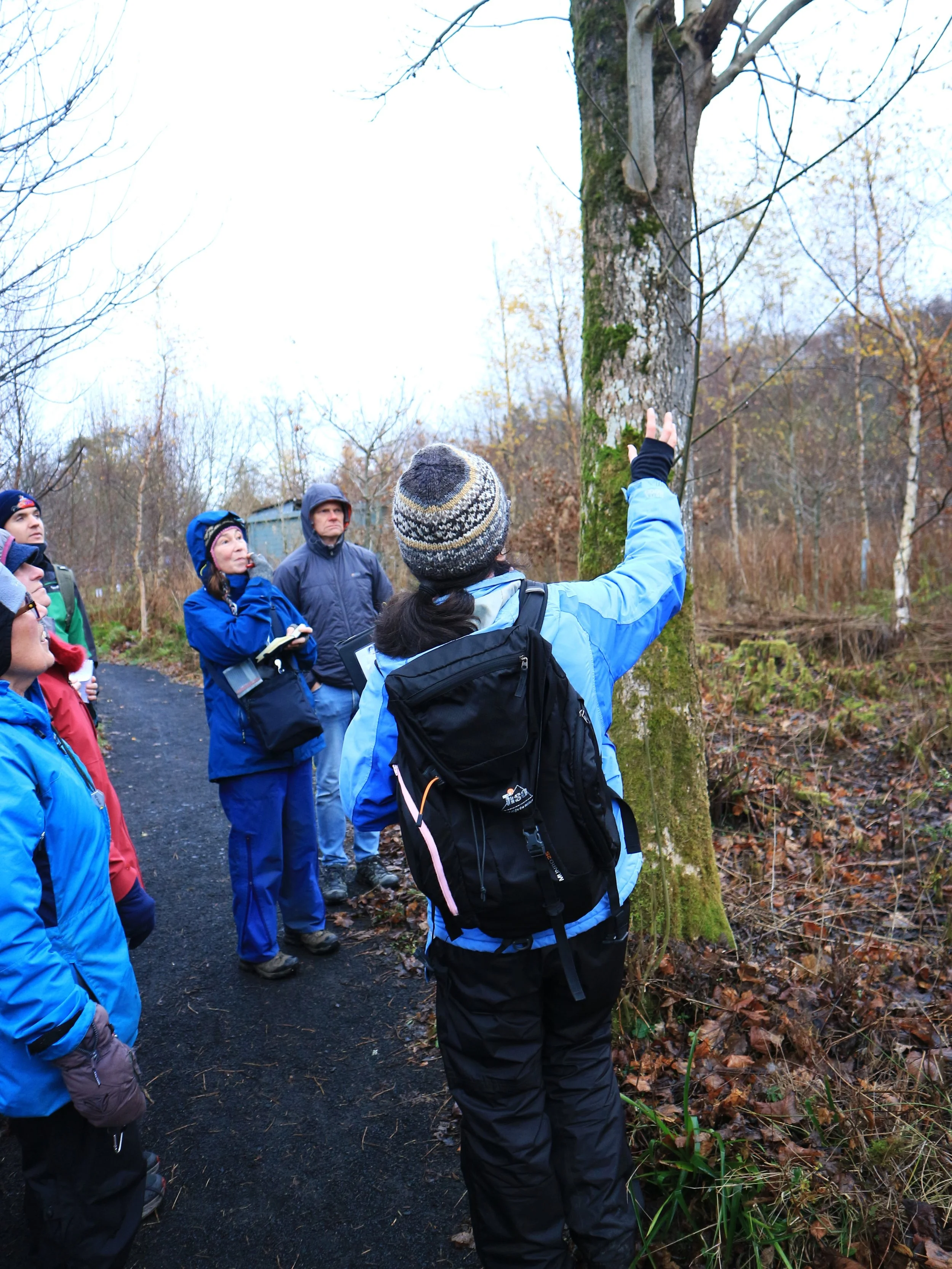
Natalie tells us about Ash trees.
The arrangement of leaves on a stem is one of the crucial identification features when looking at trees in winter. These arrangements may be opposite, alternating or spiral. Look at last year’s growth, lenticels, and leaf scarring. Armed with this advice, a field lens, and some specimen books, we set off into the woods. The woods in question are those found at the Mauldsheugh Community Wildlife project in Selkirk and the occasion was our final expertise event of the autumn, ‘Winter Tree I.D.’, which formed part of the Mauldsheugh Woodland Community day. We joined Natalie Harmsworth from The Wildlife Information Centre for a hands-on workshop, teaching ten participants how to identify some of the types of deciduous, broad-leaf trees typically found in British woodlands, many of which are represented in the woodlands at Mauldsheugh.
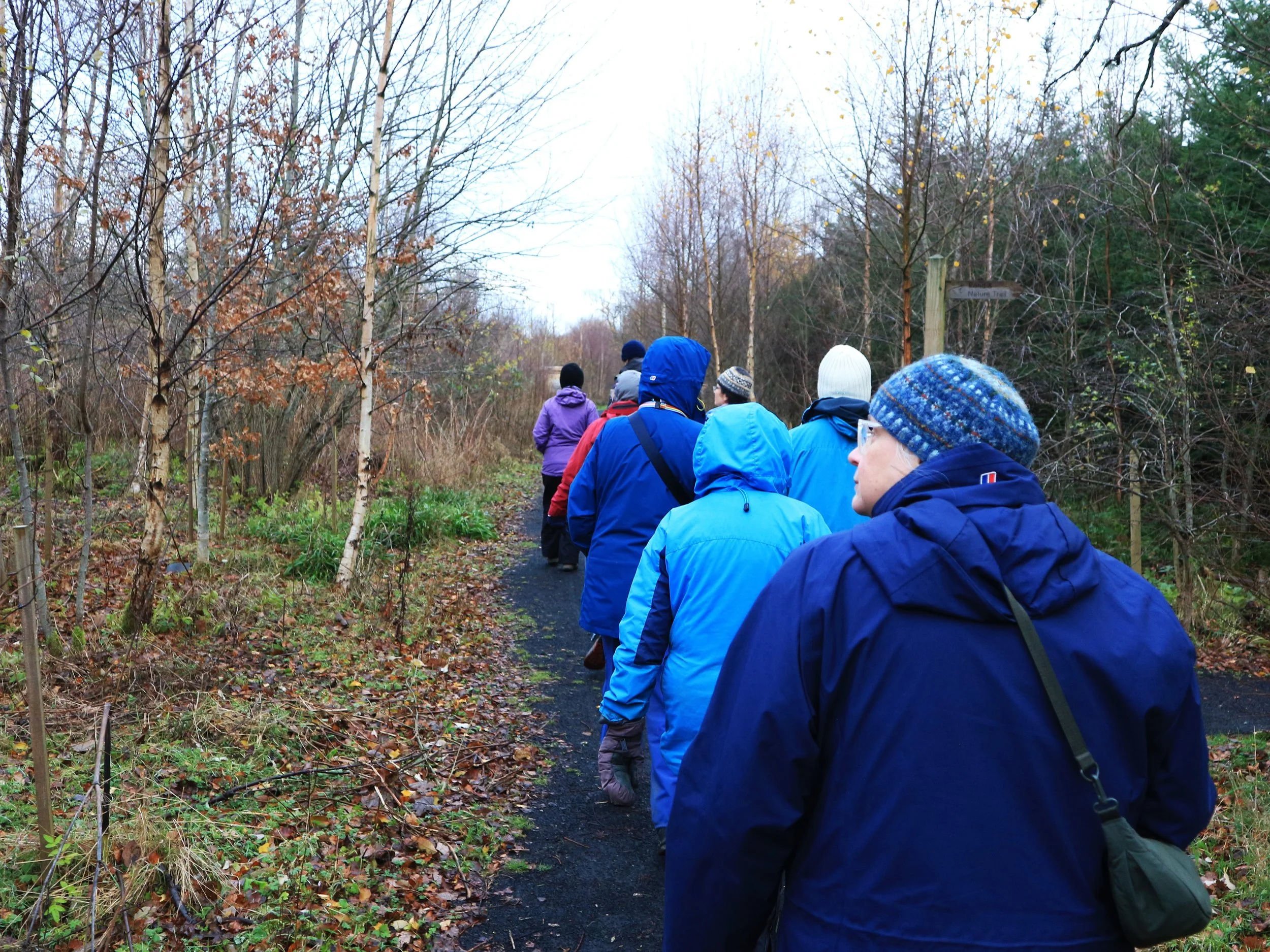
Walking through the Mauldsheugh woodland.
Mauldsheugh is a community wildlife project managed by Go Wild Scotland, the site had previously been planted with commercial forestry by the Philiphaugh estate but is now being managed to promote habitat restoration for native wildlife. The woodland is categorised as a Plantation on an Ancient Woodland Site; woodland appears in maps of Mauldsheugh dating back to 1832; however, many of the species currently found here are non-native. Since being taken over by Go Wild Scotland, over 1000 native trees have been planted, all-access footpaths have been installed, alongside new ponds, and facilities such as a cabin and hide. Their aim is to create a thriving woodland which will work for both nature and the local community.
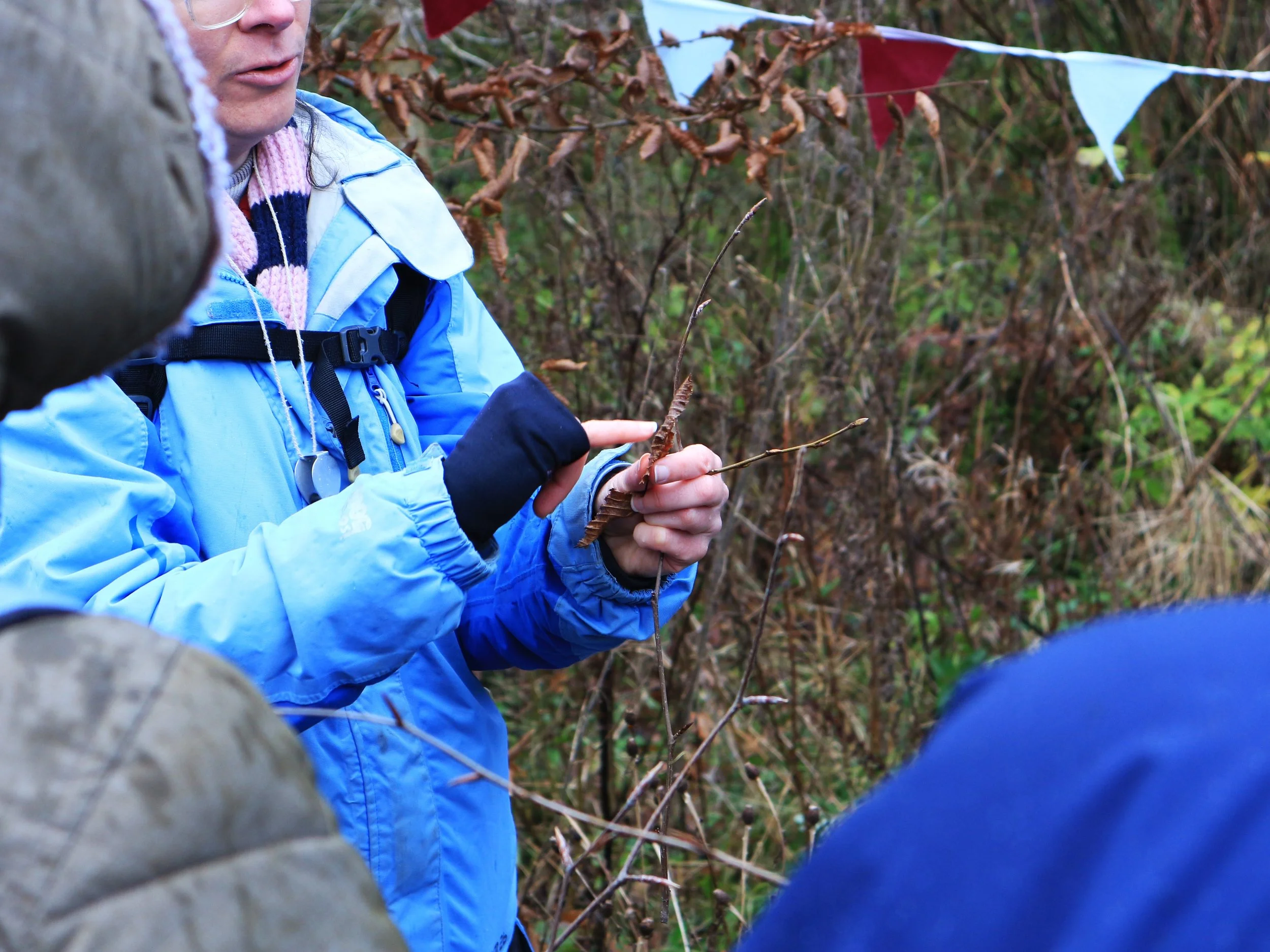
Natalie demonstrates the difference between Hornbeam and Beech.
Beginning with Elder, Natalie guided us through all of the trees in the woodlands with opposite leaf arrangements (Field Maple, Norway Maple, and Ash). After a short break we then visited all of the trees with spiral or alternating leaf arrangements, (including Alder, Hawthorn, Blackthorn, Hornbeam, Hazel, Goat Willow, Wych Elm, Cherry, English Oak, Sessile Oak and Rowan) finally concluding with Silver Birch. It was a proper winter day: biting cold but we stayed dry and were rewarded with a morning spent learning about our surroundings.
Thanks to Natalie from TWIC and Angela from Go Wild Scotland, it’s wonderful to see the ongoing work and enthusiasm to turn Mauldsheugh into a real asset for for the people of Selkirk and a gain for biodiversity. We plan to run another event based upon wildlife recording with TWIC in the early spring; look out for details in the New Year.