
Virtual Fencing and GPS Technology trial in yarrow
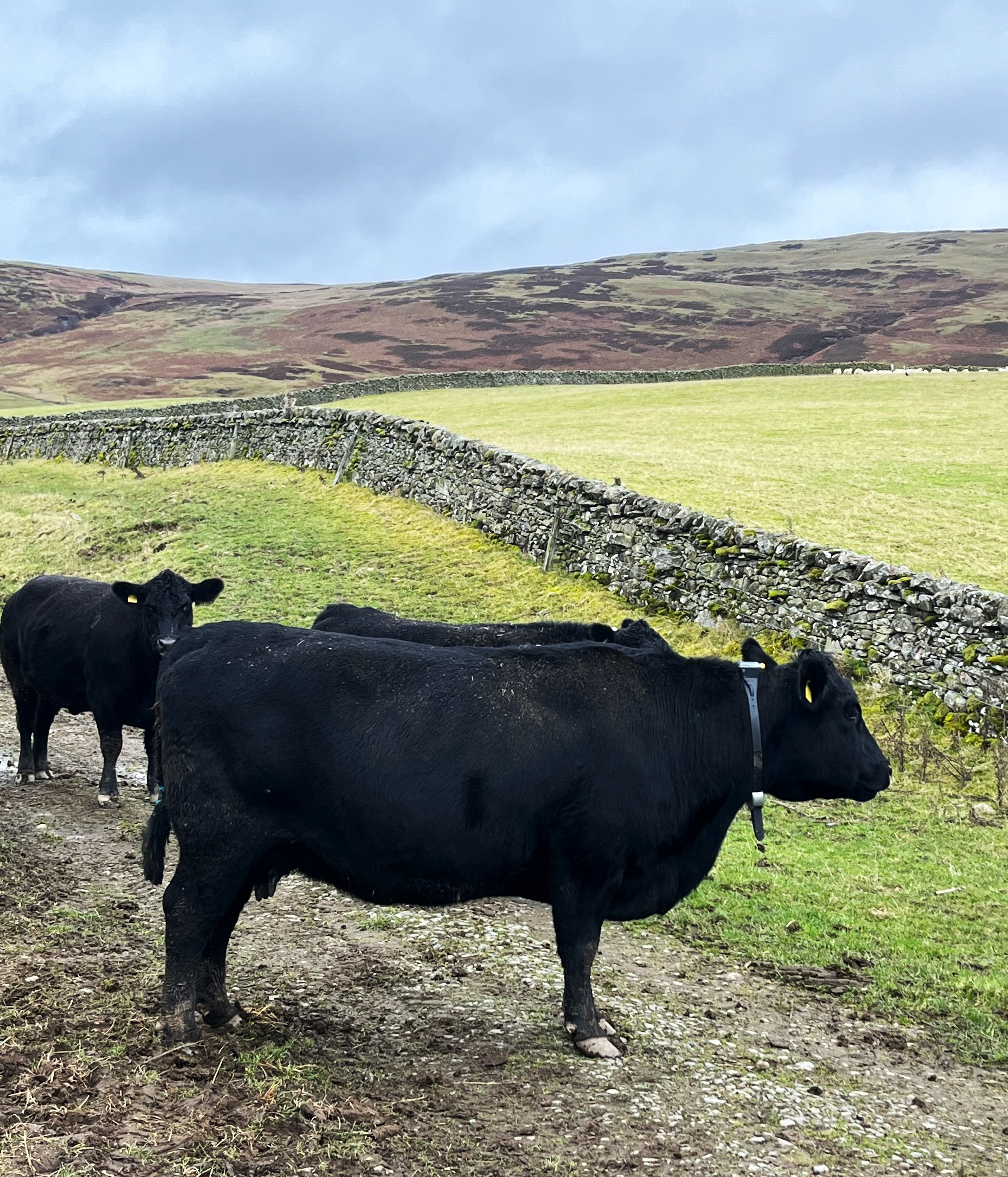
Cows fitted with GPS collars
Across the UK’s uplands, grazing livestock play a vital role in shaping some of our most valued landscapes. Species-rich grasslands, heather moorland, peatlands, and scrub mosaics all depend on the right level of grazing — too much or too little can quickly damage biodiversity.
Virtual fencing and GPS collar technology is increasingly being recognised as a practical tool to support this balance, helping farmers and land managers deliver conservation outcomes whilst ensuring that traditional hill grazing systems remain viable. We are thrilled to be able to showcase a local farm trialling these new tools in their quest to establish a business model which is more sustainable, both financially and environmentally.
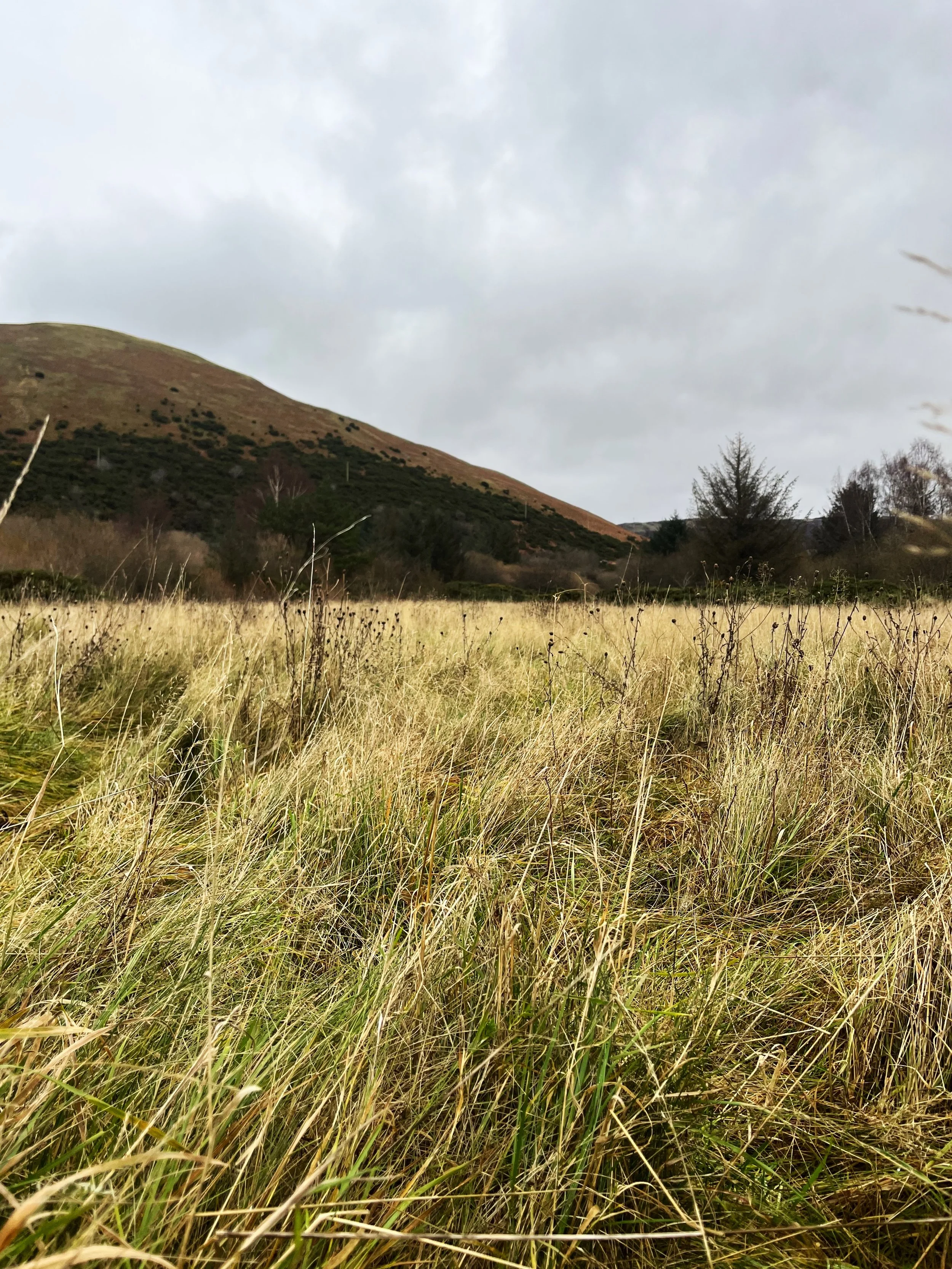
Species-rich grass land at Sundhope.
Sundhope Farm in Yarrow Valley are trialling GPS collars on a small group of native breed Aberdeen Angus Cows. They hope to see multiple benefits to the herd and to the land as a result. Targeted grazing will allow stock to be guided to specific areas, helping maintain species-rich grassland, heather moorland, and scrub mosaics without overgrazing sensitive sites. This helps the protection of vulnerable habitats as stock can be excluded from peat bogs, nesting areas, riparian zones, or recovering woodland while still grazing nearby land. There will be reduced need for physical fencing and support for traditional grazing regimes. Improved biodiversity outcomes may include benefiting ground-nesting birds, pollinators, and rare plant species.
For the herd they hope to see lower stress & more natural movement, improved welfare monitoring, reduced time spent checking stock on foot or quad bikes in difficult terrain, better herd retention and a great way to support agri-environment schemes.
We can’t wait to see how the team at Sundhope Farm get on!