
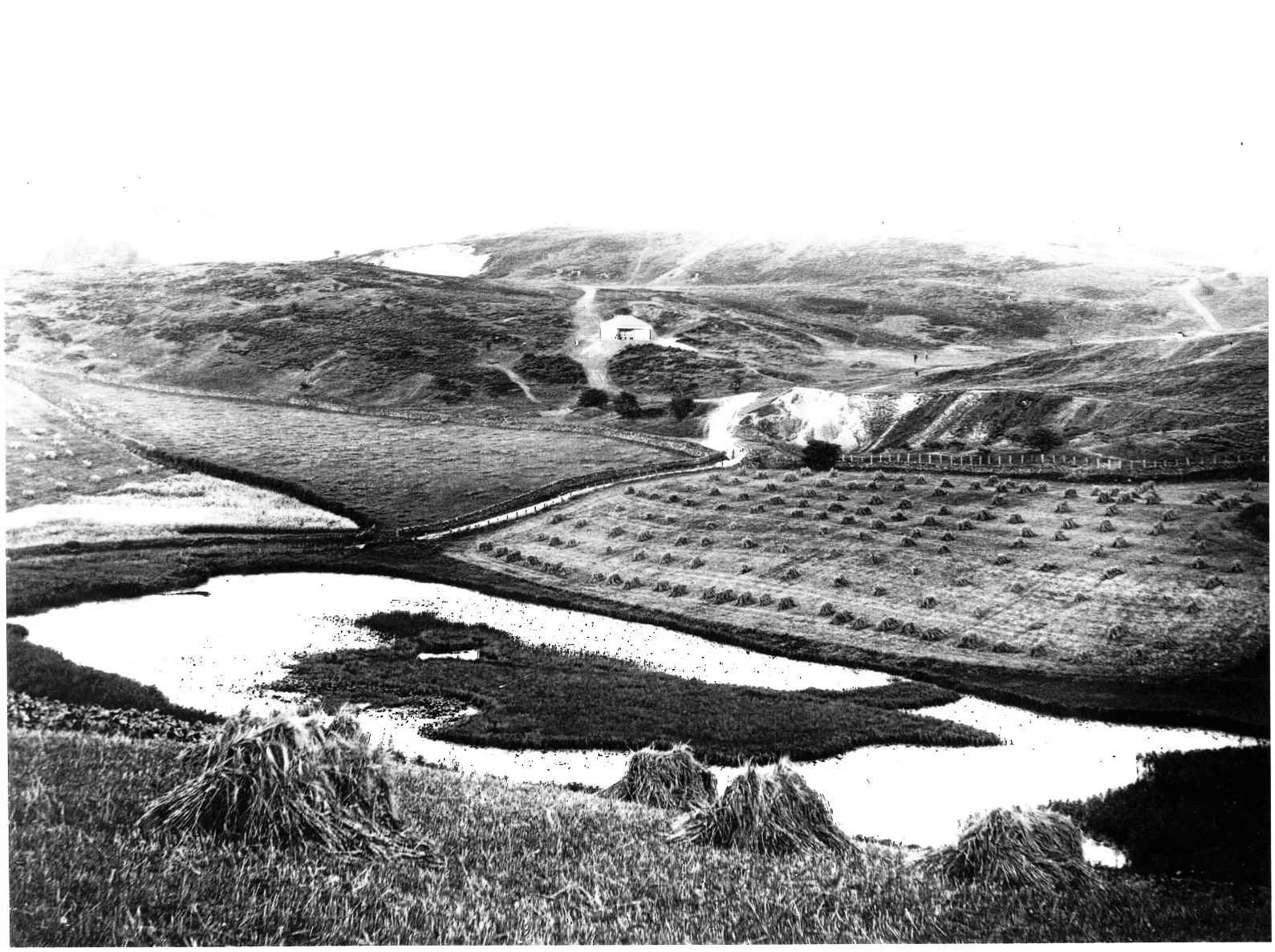
Photo of the Pot Loch taken around 1900.
This photo of Selkirk Hill presents a view of a landscape made up of farmland and bare moorland that is scarcely recognisable when compared to modern images taken from the same spot. What drives landscape change and what does this mean for the people and wildlife who make use of these places? This was the question at the heart of the Nature Networks’ talk last week about the history of Selkirk’s treasured South Commons, also known as Selkirk Hill.
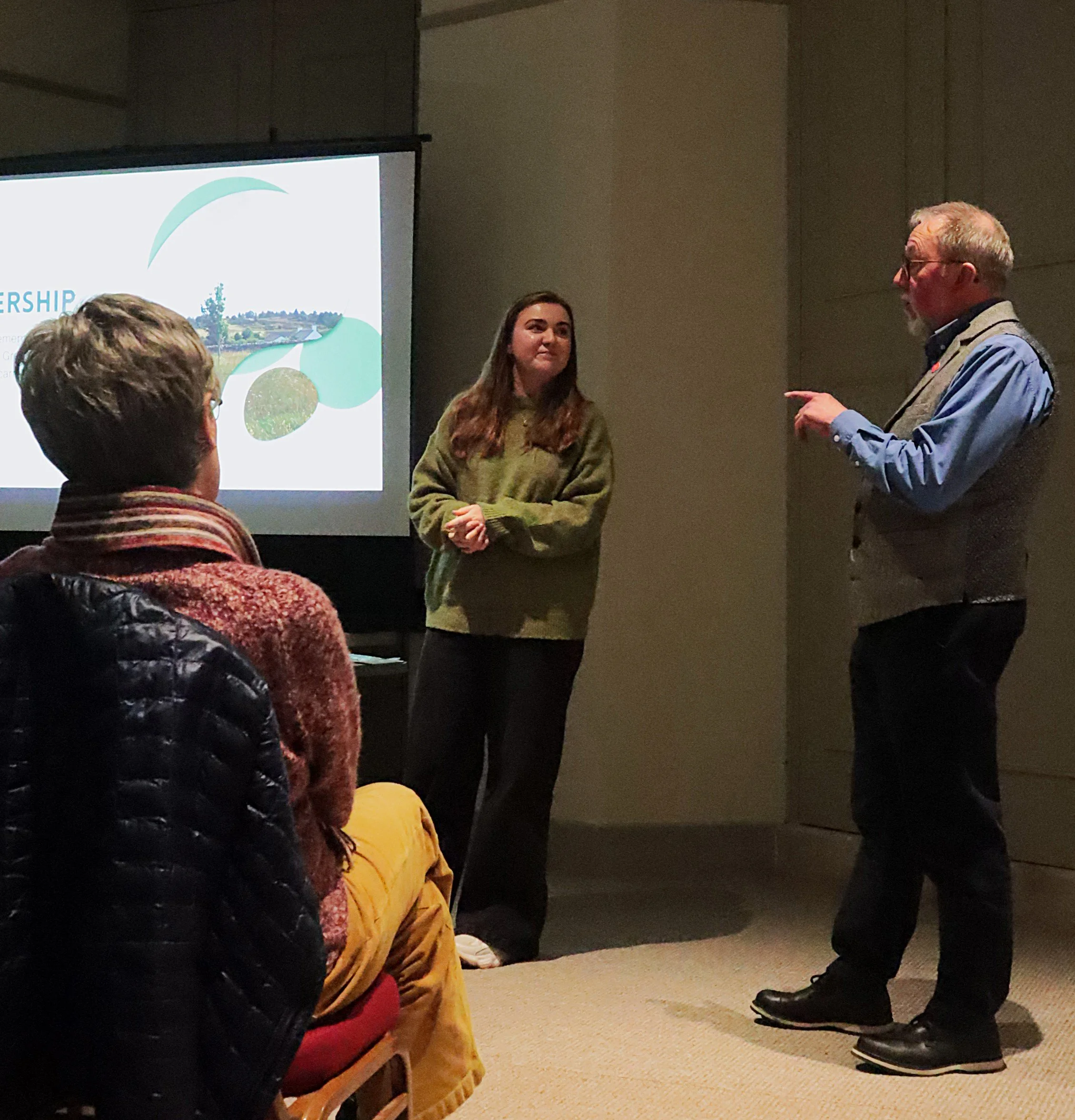
Alistair and Megan discuss future plans for Selkirk Hill
Alistair Pattullo, head of the Selkirk Hill Management Group, told us about the origins of the hill beginning with the geology and prehistory. He then traced its history in the surviving archival records from an ecclesiastical grant in the time of King David to the charter of King James VI in which Selkirk South Common extended to 146 acres and it was necessary to patrol the marches to protect this important community asset. At this time the common was used as grazing and a source of fuel and stone, this would have provided very different habitats to the present hill. My audience particularly enjoyed seeing the archival photography amassed by Alistair, which gave fascinating comparisons with the current hill.
We then heard from Megan Bond, an ecologist working for Bright Green Nature, about their involvement with the site. There was hardly any biological data relating to the hill before they began their baseline survey. Thanks to this work they will be able to keep track of changes taking place on the hill over time. Selkirk Hill is now heavily wooded and provides species rich habitats with over 130 species recorded there so far. These include rare species such as the Grasshopper Warbler which is on the UK re-list for species at risk.
Join us on 25 November to learn about the history of Deer Park and the work going on there to maintain and enhance the species rich grasslands there.