Soil Biology, composting and climate change with life to lab
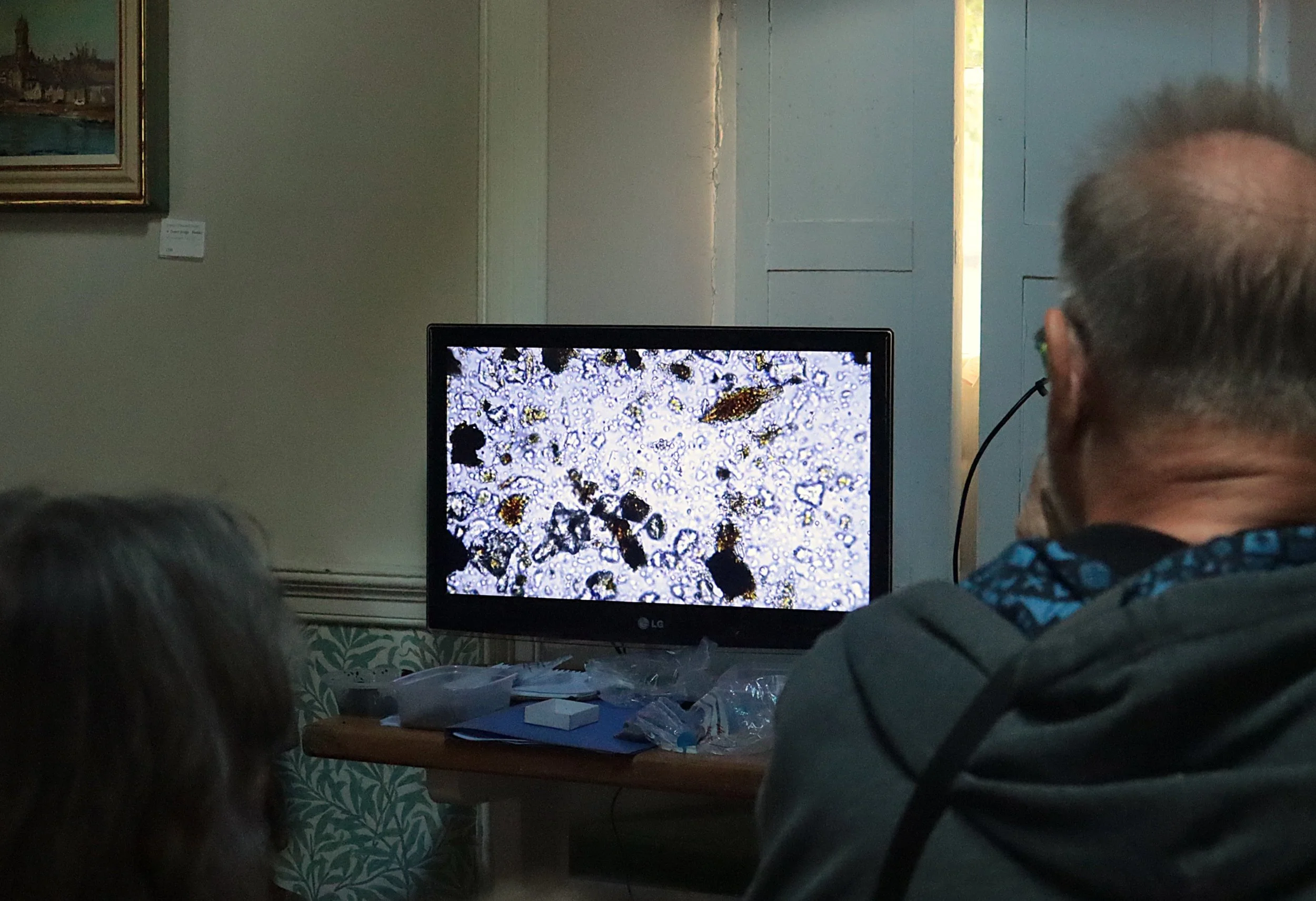
Live images from Life to Lab’s microscope.
On Thursday 30 July we were at Traquair House for our first hands-on climate action workshop of the year. We had teamed up with Traquair Forest Garden, a new community garden based on old market garden ground on Traquair Estate, and Life to Lab ( the soil science duo Jamie and Mary) to organise an evening taking a deep dive into soil.
What has soil got to do with climate change, I hear you ask? Well, soil scientist Mary explained to us that soils sequester large amounts of carbon, mainly derived from the organic matter produced by plants through photosynthesis. Healthy soil food webs boost carbon retention in soil by creating good stable carbon compounds which will not be reabsorbed back into the atmosphere. Healthy soil food webs - soils which have all the important biological components - have the added benefit of boosting productivity and thus improving plants’ capacity to photosynthesis and capture more carbon. Hence, climate resilient soils will prove crucial in both adapting to, and mitigating, the effects of climate change.
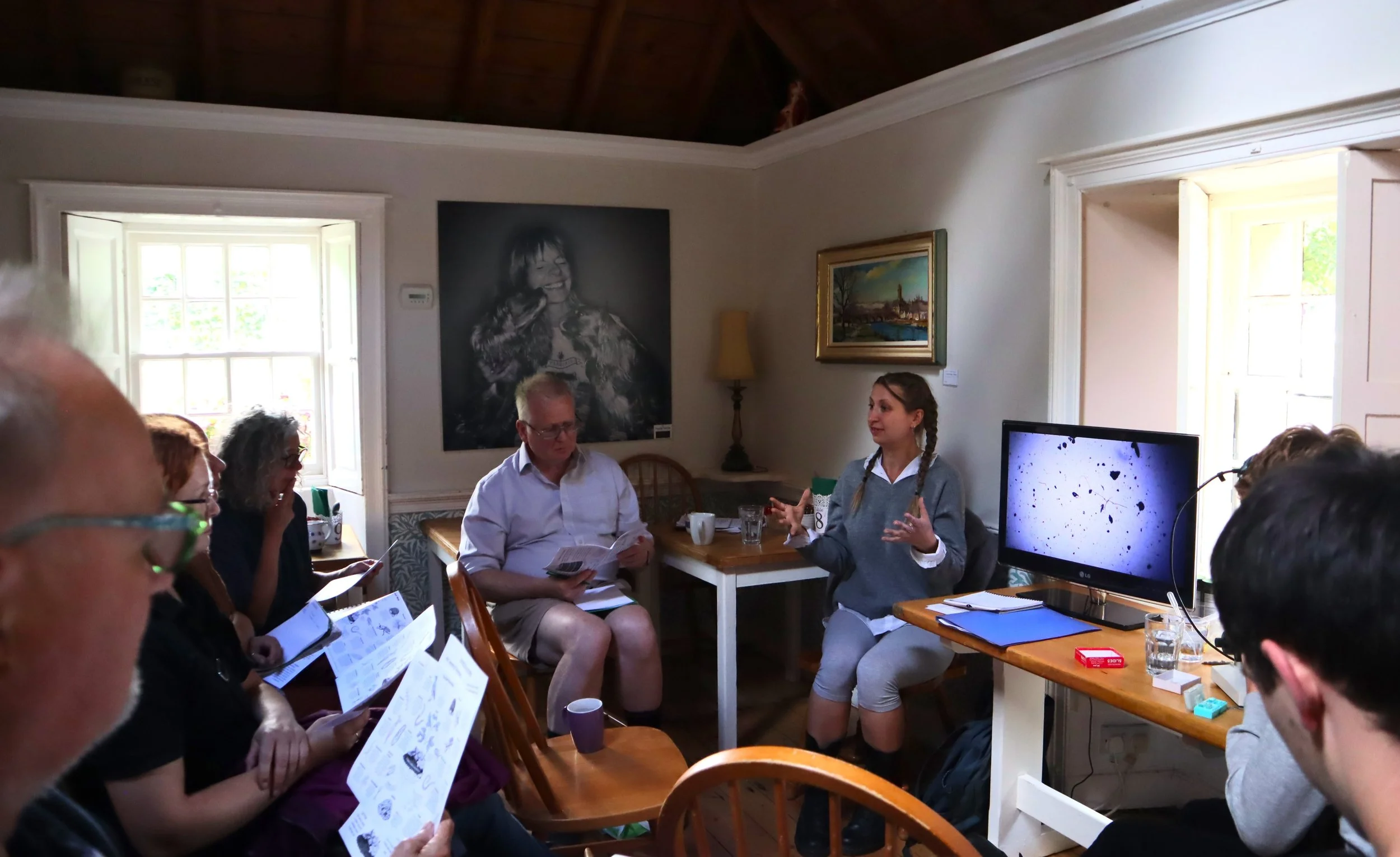
Mary explains some of the basics of the soil food web.
The first part of the workshop was the microscope session; this entailed looking at soil samples, provided by the fifteen participants, through a microscope. Samples were provided from a variety of settings including : vermicompost, ancient woodland, and urban garden. For each sample, Mary and Jamie pointed out and explained the different organisms present and what this meant about the health of each sample of soil. For instance, fungus is an important decomposer of organic matter in soil, yet, nearly all soils miss out on an important fungal component, reducing their productivity. Decomposed organic matter, which has been processed by bacteria, fungi or micro-fauna (such as the nematode pictured below), is stable and thus, good for storing soil carbon. Future farming, explained Jamie, will be all about maximising soil biology in search of optimal productivity.
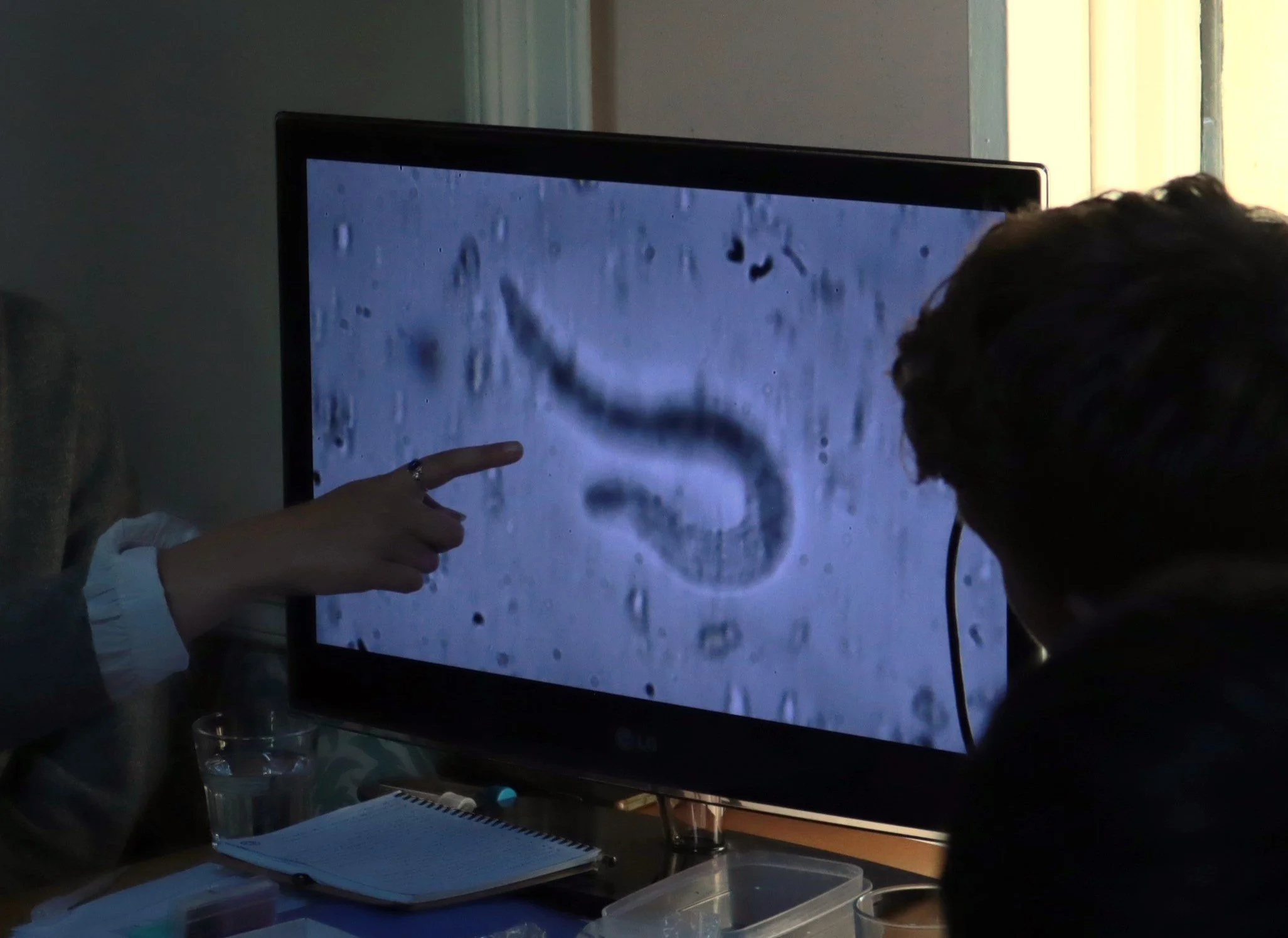
Look: a nematode.
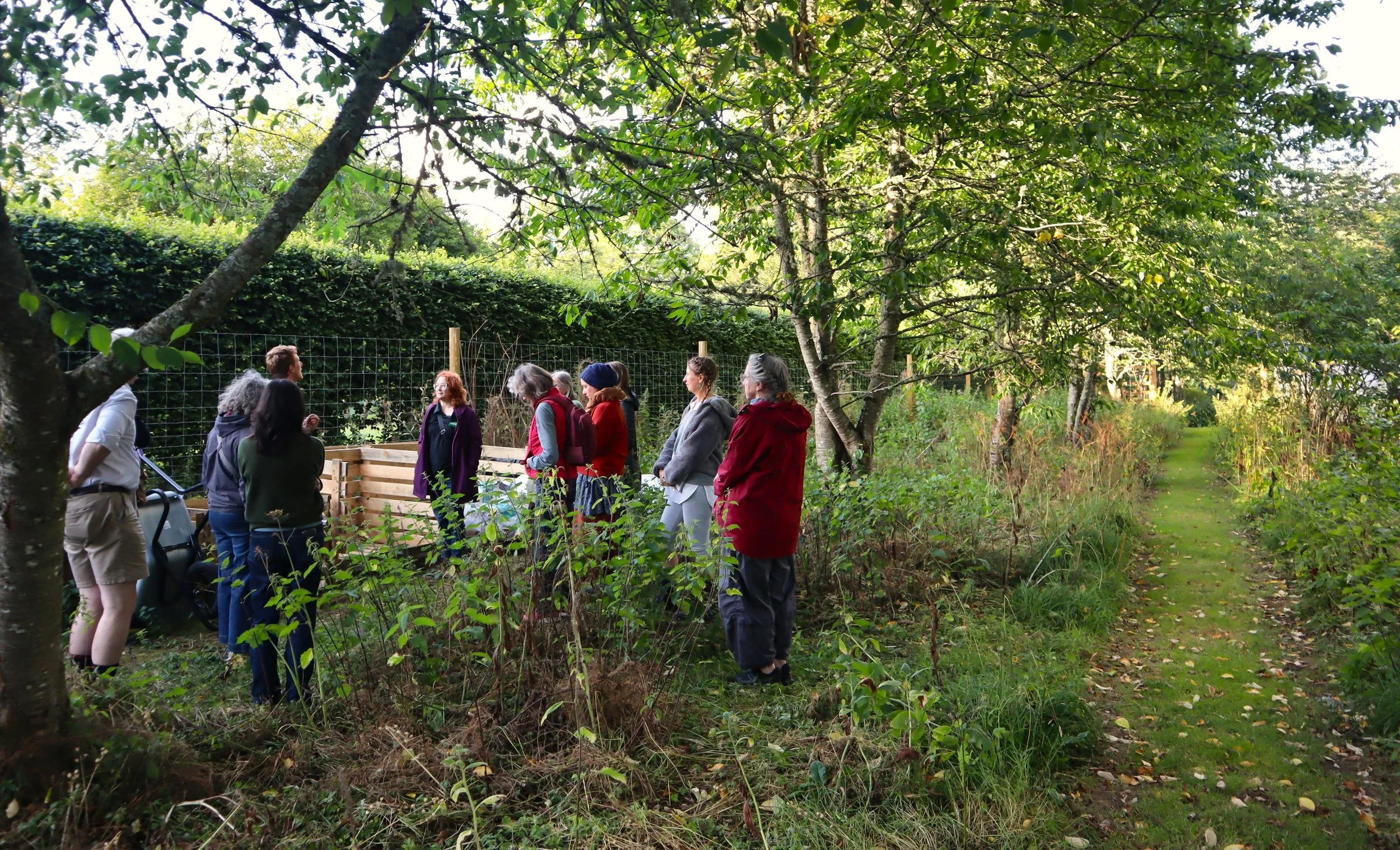
With the soil samples analysed, the group headed out into the daylight to get some insights into composting. The group at Traquair Forest Garden are in the process of setting up a composting system in their garden. With this in mind, Jamie and Mary explained some of the essential elements of composting and then held a compost Q&A. The many growers present availed themselves enthusiastically of this opportunity, asking about ratios of carbon to nitrogen, optimal temperatures, and the drawbacks of mass-produced compost which can be bought in shops (high in nutrients, low in biology).
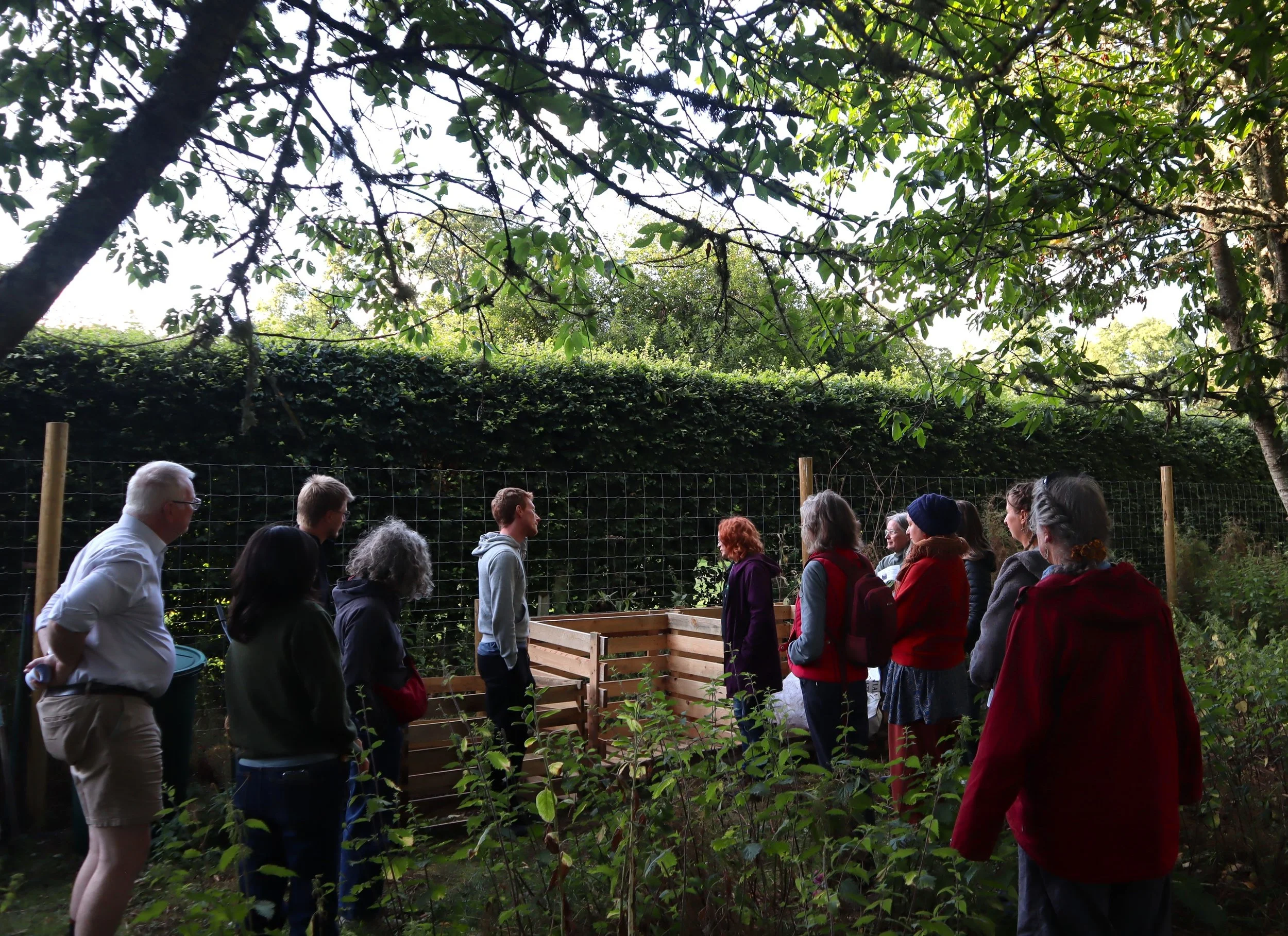
Jamie answers questions about composting in the garden at Traquair.
At the end of the evening, one participant explained that he had worked around waste recycling and composting his whole life but had never seen it under a microscope before; the experience had opened his eyes to a new understanding of a very familiar subject. Thank you to Jamie and Mary, alongside Isabella from TFG for helping to put on such a fascinating evening which we hope everyone found useful.