
Introduction to Wildlife Recording at glenlude
If you are interested in bird watching, or searching for flora and fauna in your local area, then why not take the next step and record what you see? The information that you record could then be made available to others. Those others could include your Local Environmental Records Centre (LERC) that collects, collates and disseminates information on wildlife in your area. This information could form the basis for environmental decision making, planning, education and conservation. A decline in biodiversity is at the heart of the climate crisis, the data collected through wildlife recording can make a significant contribution to our ability to monitor the health of species and habitats.
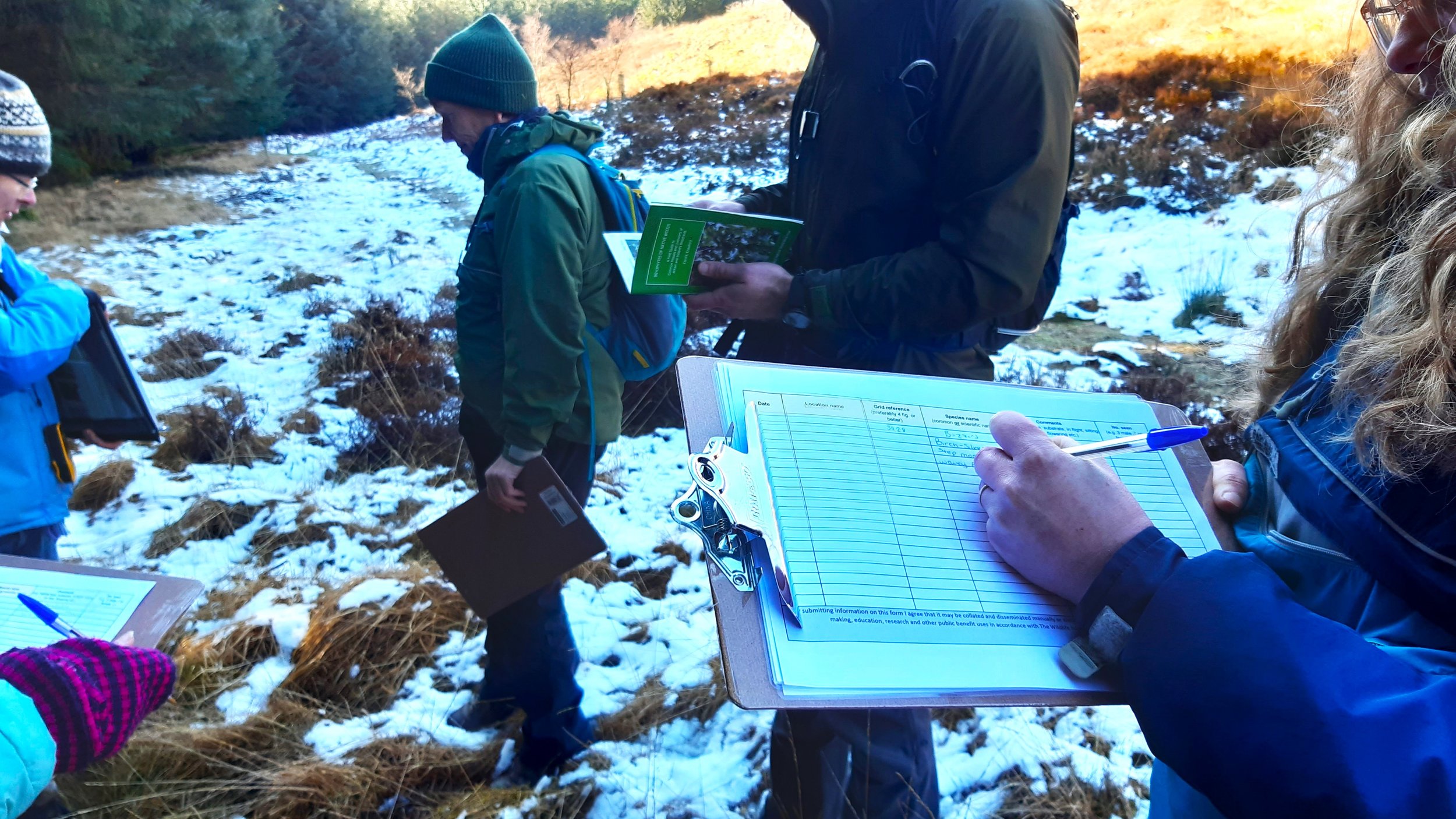
Creating biological records in the field at Glenlude.
The LERC for the Scottish Borders is The Wildlife Information Centre (TWIC) and they hold 4.3 million species records for the South East of Scotland going back to the 1800s. On Saturday 7, we were joined by Natalie Harnsworth from TWIC to run a workshop, introducing the basic principles of wildlife recording, at the John Muir Trust’s site at Glenlude, near Innerleithen.
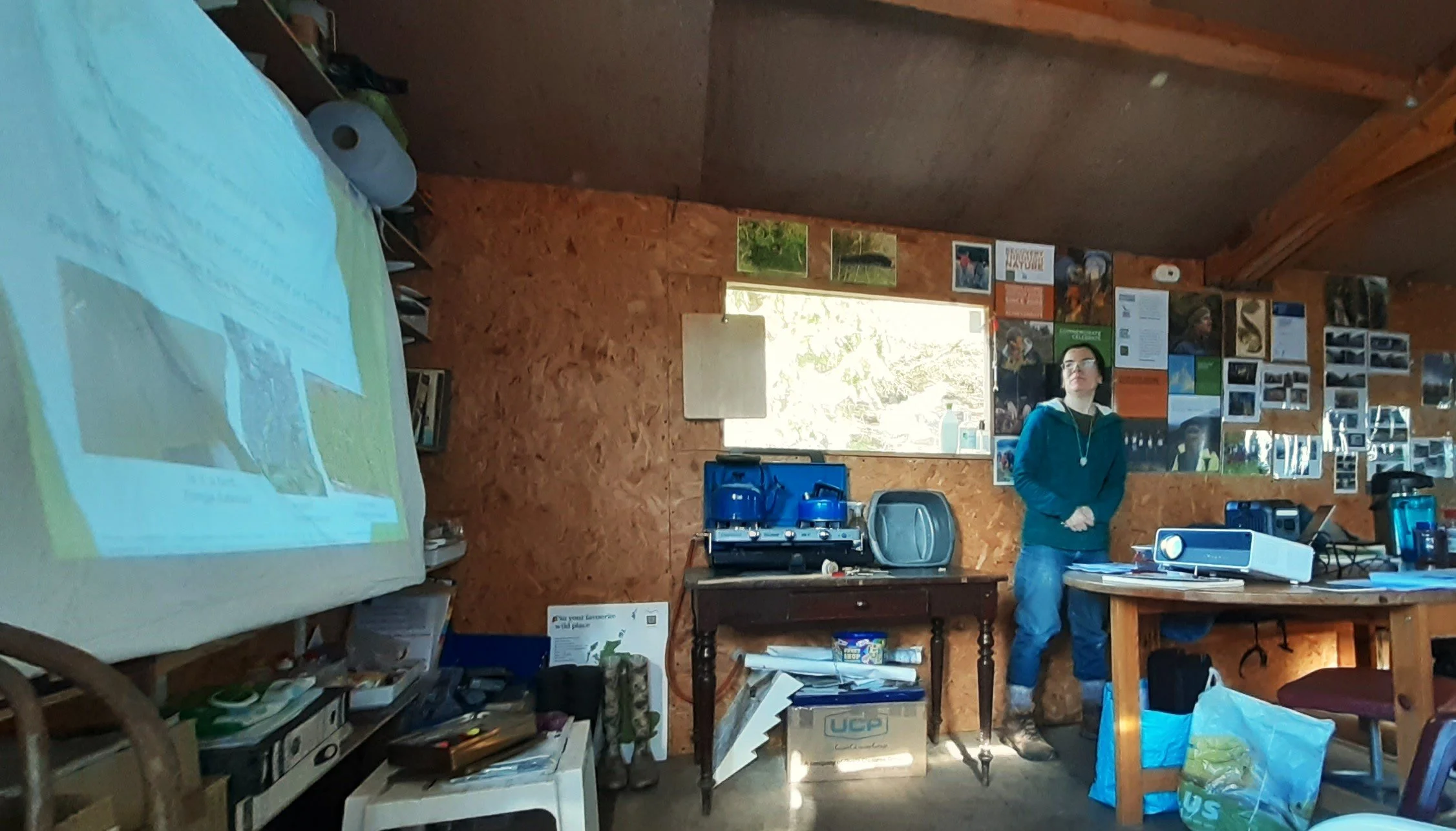
The presentation in the JMT hut.
A group composed of JMT volunteers and members of the public attended the session which began with a presentation, over tea, on the ‘who, when, what, and where’ which makes up a valid biological record. Natalie explained the basics of how to distinguish between a recorder and a determiner; how to pin down a grid reference with the right level of precision; and how to decide what to record. She also drew our attention to a variety of monitoring schemes operating locally and nationally. The indoor aspect of the workshop concluded with an overview of how to use iRecord, a site for managing and sharing biological records.
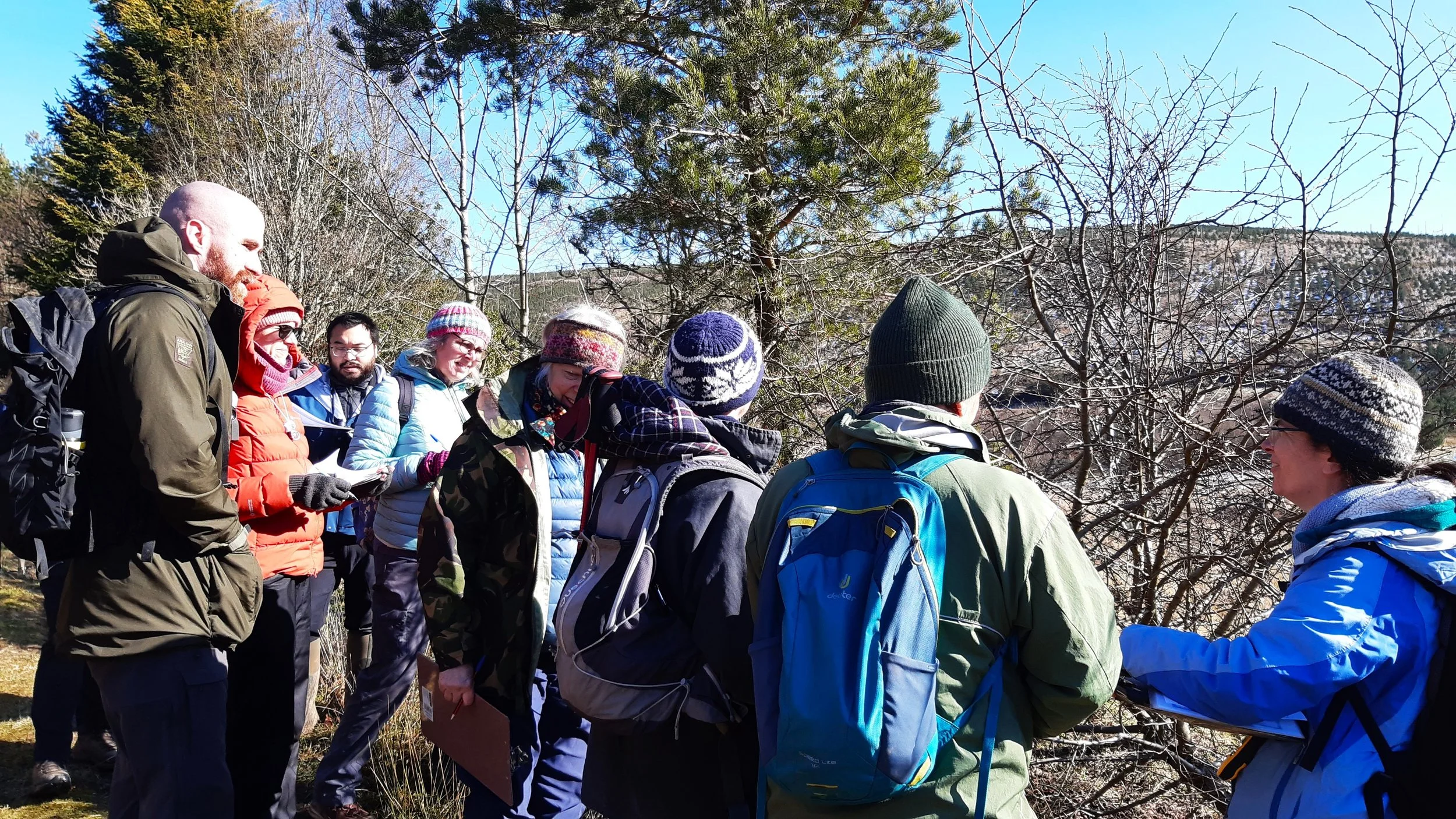
Identifying trees can be difficult in winter.
The group then headed outside to have a go at creating biological records for the species found along a 500m walk beginning at the JMT’s cabin and passing through some of the old conifer plantations at Glenlude. There was a huge contrast in temperature between the sunlight-flooded open spaces, and the shaded walks behind the trees where snow still lay.
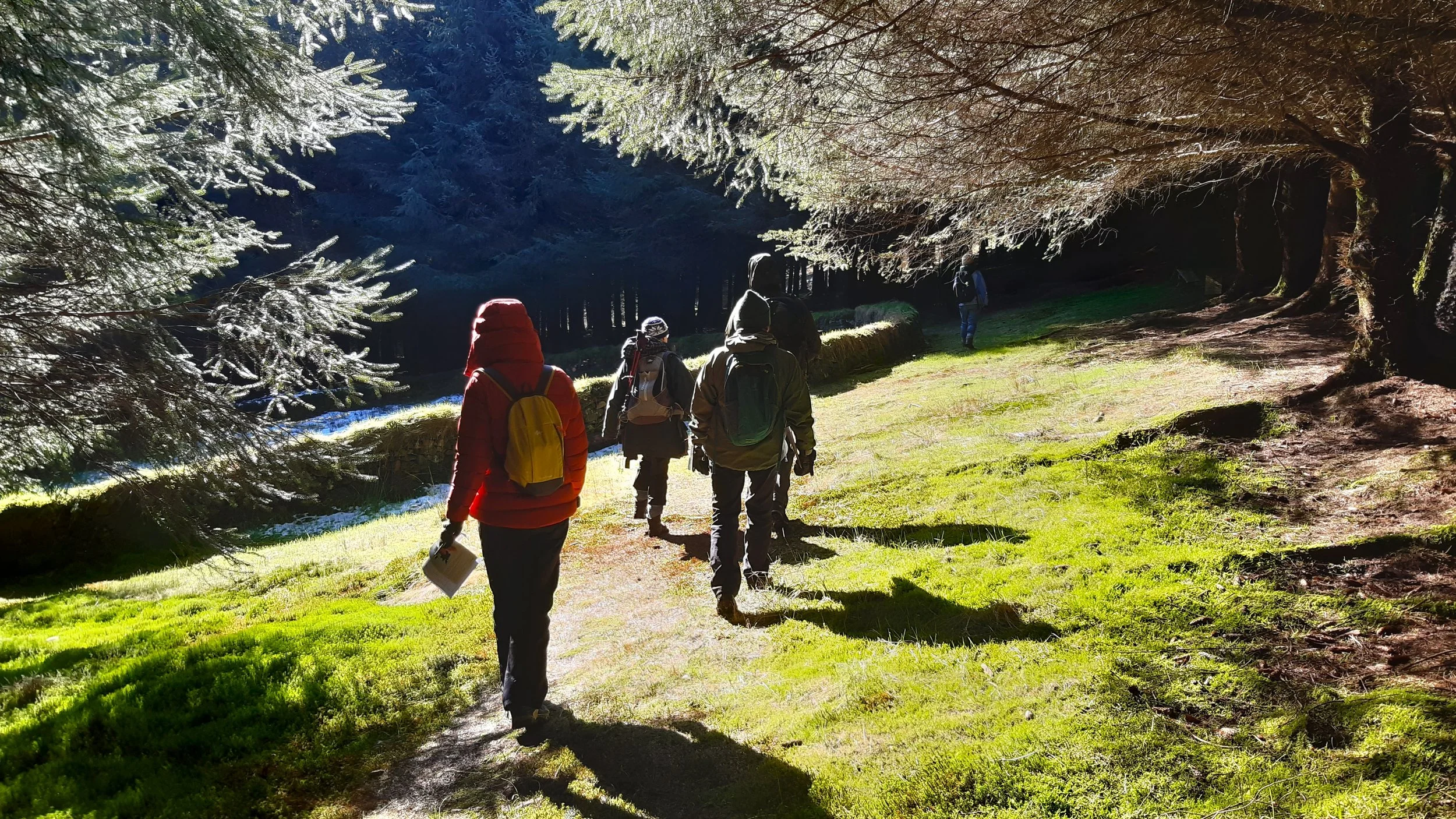
It is still relatively early in the year for wildlife recording; however, the workshop was planned with the intention of priming participants with the necessary skills to be well equipped for the forthcoming recording season. During the walk, Natalie was able to help participants identify several species of mosses, sedges, rushes and grasses, including Step Moss and Tamarisk Moss, Soft Rush, Tufted Hair Grass and Yellow Sedge.
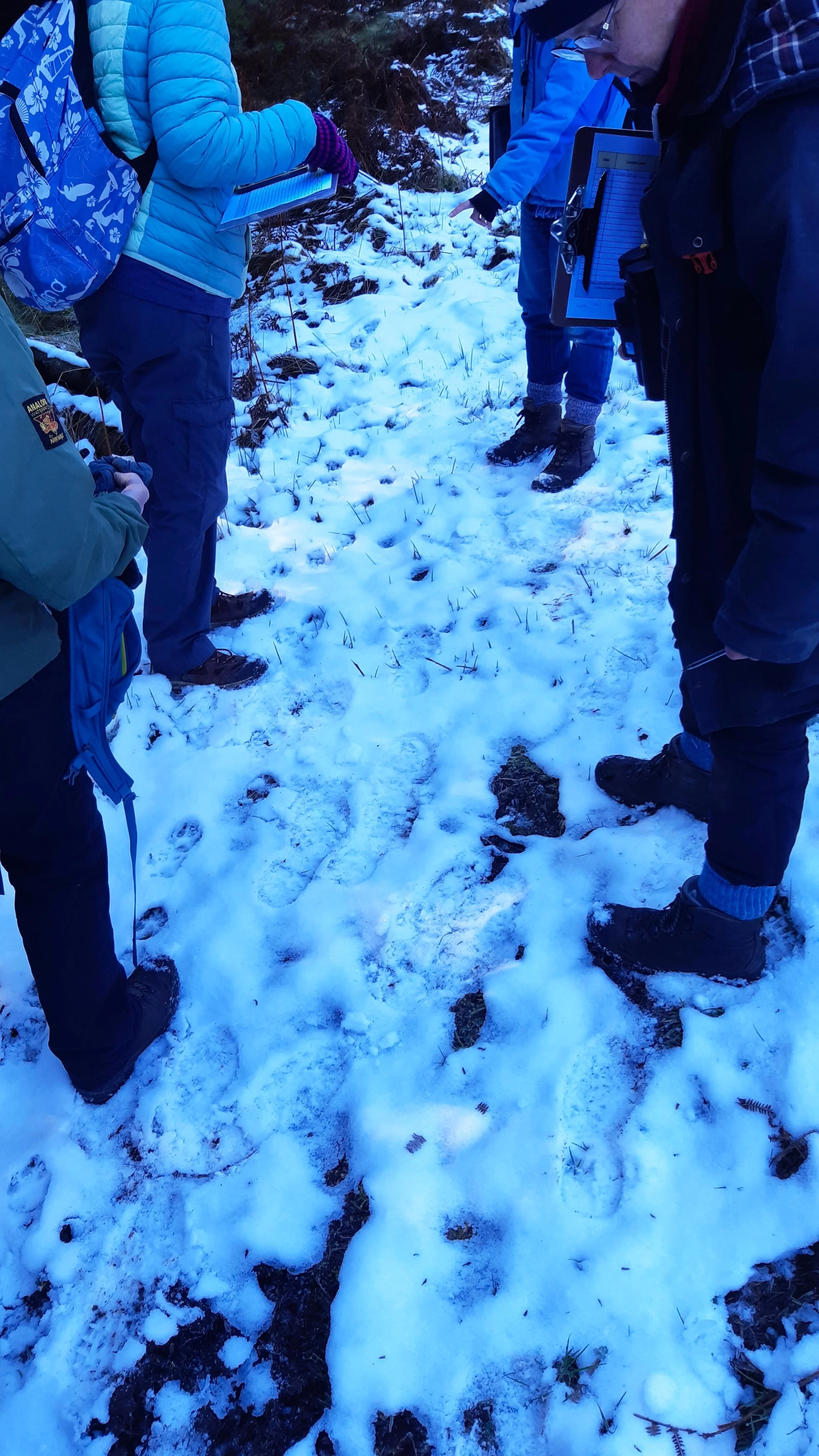
Prints can constitute a valid way of identifying the wildlife present (however, not in this case; these were left by a dog).
Many thanks to Natalie from TWIC and Ellie from the JMT for helping to facilitate the session. We will be back with more workshops later in the spring, so keep you eyes peeled for updates.