
Honeyland
As the documentary film Honeyland builds to its slow and sad climax the protagonist Hatidze tells her mother: ‘They’ve killed all my bees’.
‘May God burn their livers’ her mother replies.
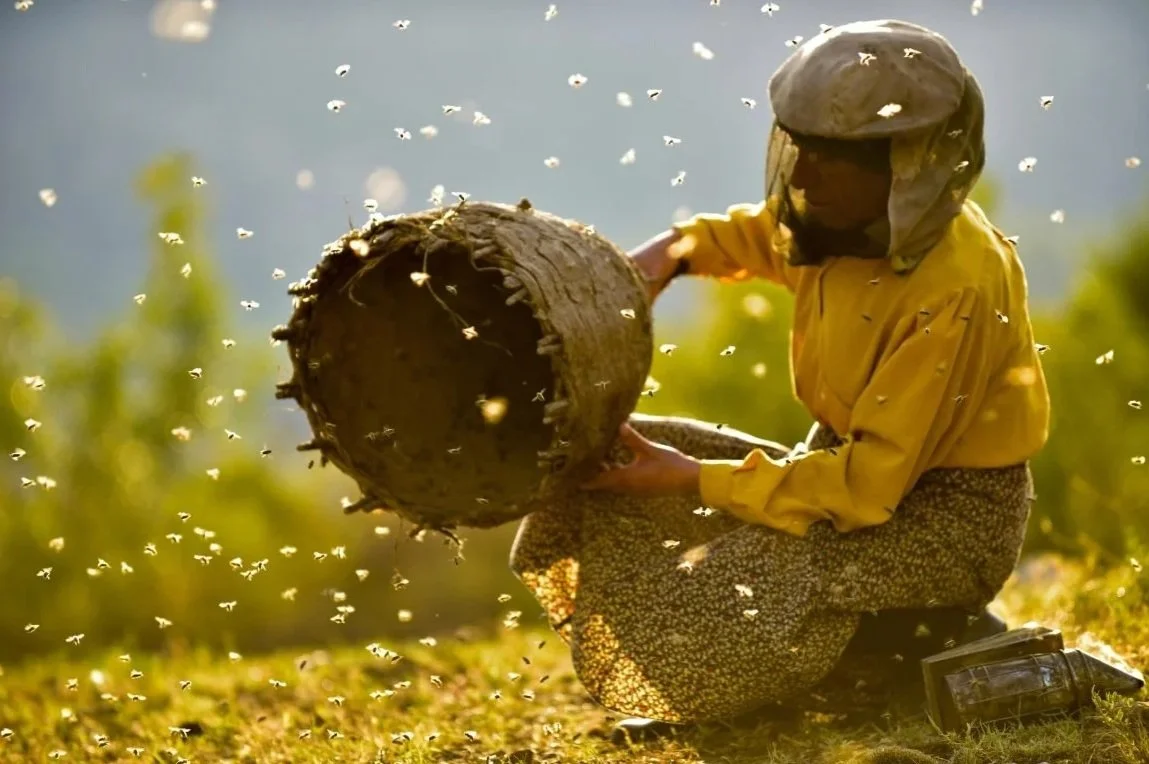
Ostensibly, Honeyland is a film about Hatidze’s life as a beekeeper in the virtually abandoned village of Bekirlija in North Macedonia; however, the film really serves as an analogy for humanity’s exploitation of natural resources and the conflict between subsistence methods of agriculture and the demands of capitalist systems.
Hatidze sustains herself and her ailing mother through beekeeping methods learned from her grandparents. These methods place an emphasis on symbiosis: ‘half for me and half for the bees’ is her repeated refrain. On the other hand, the semi-nomadic Sam family, who over-summer each year in Bekirlija, through a mixture of inexperience, desperation and greed, quickly exhaust the fragile natural resources of the area. In doing so, they threaten to wreck Hatidze’s fragile way of life; the Sam family burn the grass surrounding the village, denude the limited water supplies and take too much honey from their bees leading them to kill Hatidze’s bees. The films ends ambiguously: for Hatidze and nature the outlook is bleak, yet some of her colonies of bees survive. Can humanity learn from its mistakes before it is too late?
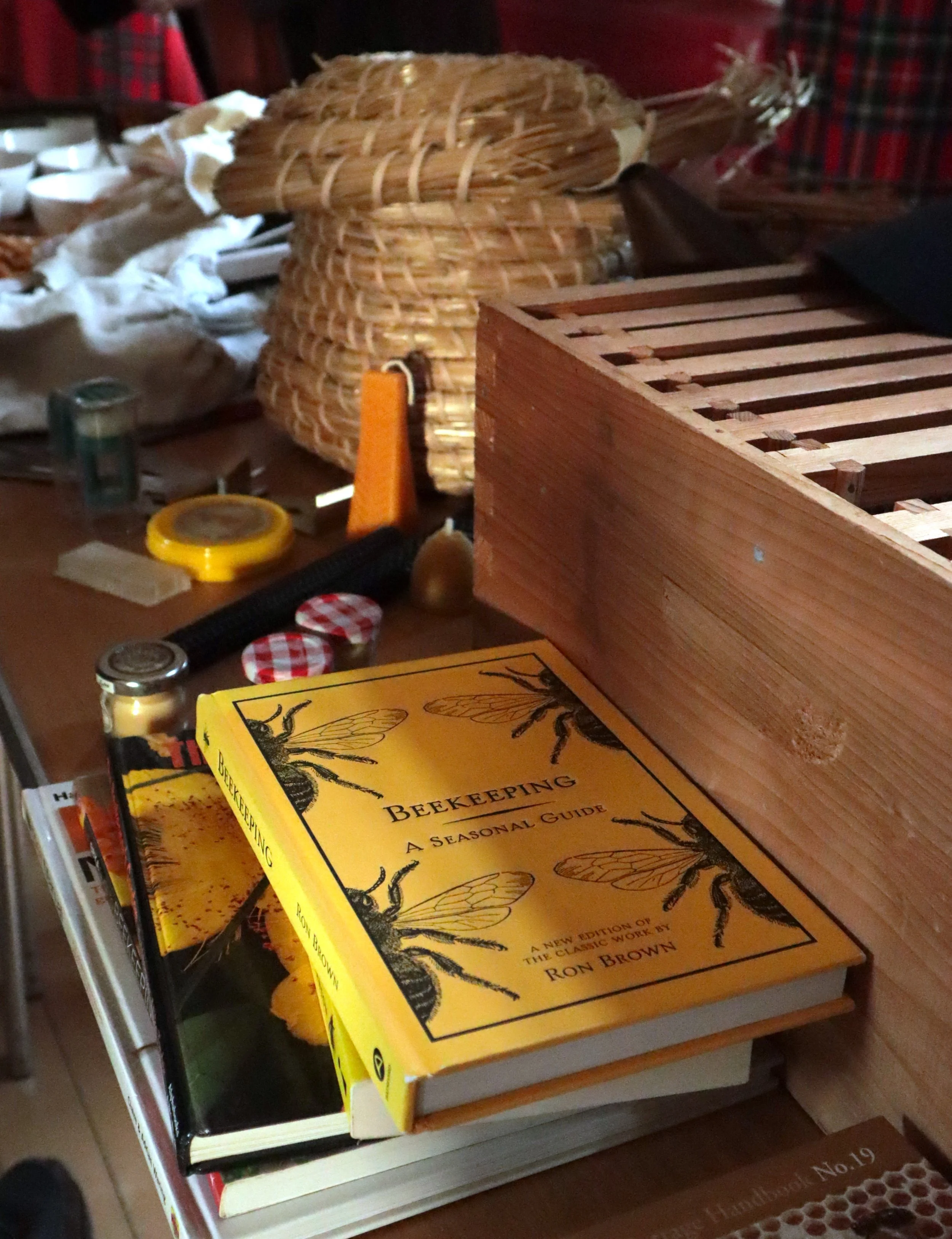
Prior to the film we were treated to a fantastic presentation on beekeeping by Diarmuid Cowan of the Newbattle Beekeepers Association in Mid-Lothian. He gave us an overview of the basics of bees and beekeeping, including some fascinating insights into how Queen bees are selected and nurtured by a colony of bees. Diarmuid had also brought along a large selection of different honeys for everyone to try. Diarmuid also highlighted that the resilience of bees to climate change is a cause of great concern. As bees are one of the worlds most significant pollinators, they are a keystone species and their decline would have a enormous impact upon ecology and human food chains worldwide.
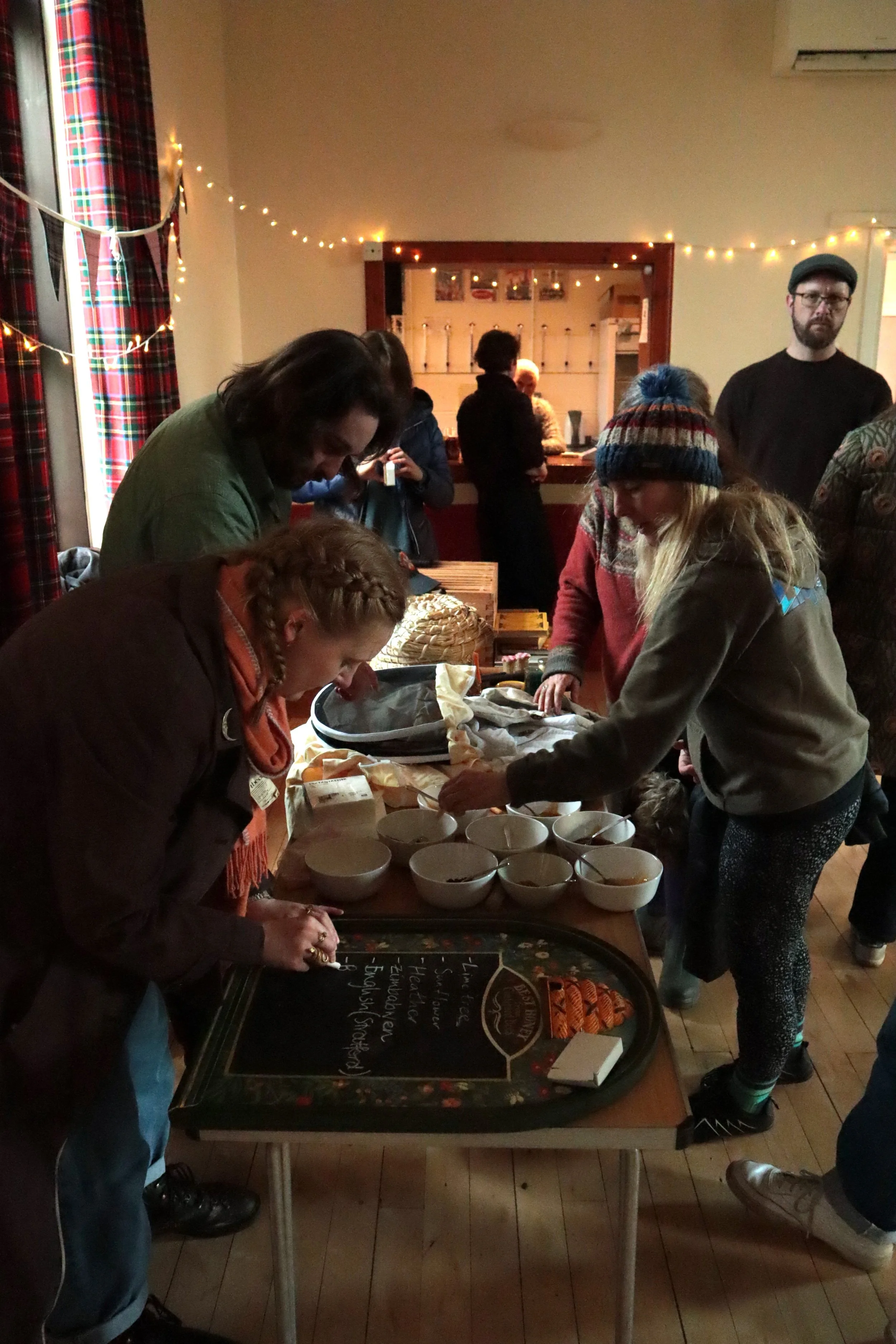
Many thanks to Traquair Film Club, Newbattle Beekeepers Association and Take One Action Films for helping to bring the screening to fruition. Our film club scheme, whereby Borders film clubs can screen and environmental title for free continues during 2026-7. Please get in touch if you are interested in screening a film.